Do you tip a gondolier in Venice?
Tipping a gondolier is optional in Venice, not customary. Italy has no percentage convention. What people actually give, when it is earned, and why in cash.
 By Marco Zanetti, Venice gondola ride specialist & canal experience guide
Short Answer
A tip is optional, not part of the regulated fare. If you choose to give one, keep it separate from the ride price and any music or photography package you booked.
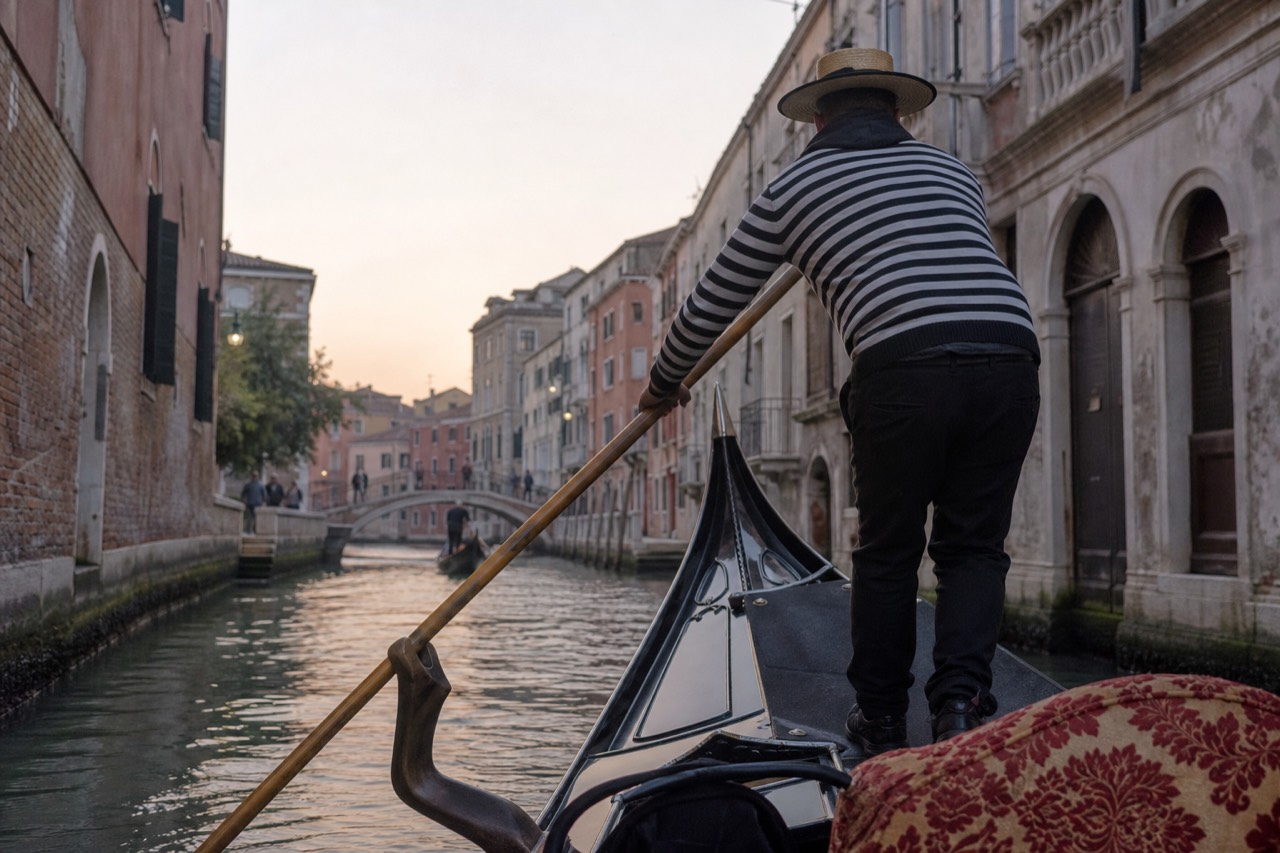
At the end of a ride the gondolier steps off first, takes your hand, and helps you up onto a wet step while the boat shifts under you. That is the moment the question lands, with a queue forming behind you and a wallet in the wrong pocket. Worth deciding before you board.
Price and review comparisons below use the site’s August 2026 snapshot. Online quotes depend on the date, party and option; compare the final total and current inclusions before paying.
Booking choice: Make music a booked inclusion with a private serenade, instead of hoping a tip will turn an ordinary ride into one. Check the Ride Options ↗
Is a tip expected in Venice?
No. Tipping a gondolier is optional and discretionary, not customary. Current guidance from Venetian and Italian sources is consistent on this: the regulated fare is the transaction, and some sources treat a gratuity as effectively already inside it. A tip is a response to a good ride, not a social obligation you have failed if you skip it.
Italy in general does not run on tipping the way North America does, and there is no percentage convention to fall back on. What exists instead is a habit of rounding: leaving the small change, or handing over the next round note and waving off the difference. The Italian word for it, il resto, literally means the rest, which tells you how small the gesture is meant to be.
Restaurant vocabulary confuses this further, so here is what those words on an Italian bill actually mean, and why none of them applies on the water.
| Term | What it is | Does it apply to a gondola? |
|---|---|---|
| Mancia | A voluntary tip | Yes, entirely at your discretion |
| Il resto | Rounding up, leaving the change | Yes, the most common gesture here |
| Coperto | A fixed per-person cover charge, usually €1 to €3 | No, restaurants only, and it goes to the house |
| Servizio | A service charge, often 10 to 15% where it appears | No, and where it does appear no further tip is needed |
| Percentage tipping | A 15 to 20% norm | Not an Italian practice at all |
How much do people actually give?
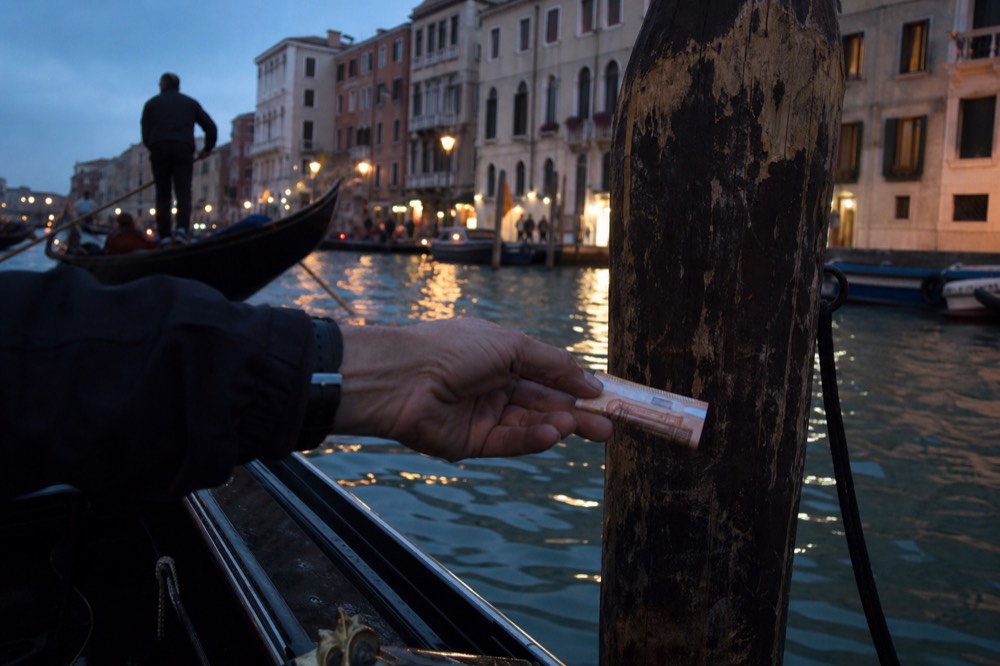
Five to ten euros is the figure that recurs across recent traveller reports and guides for good service on a standard 30 minute ride. Rounding the fare up is the other common move. One widely read guidebook voice suggests 5 to 10% when the gondolier gives you the full time and some entertainment, which on the €90 fare works out at roughly €4.50 to €9, landing in the same band.
That band is stable because the fare is stable. The city's published tariff is €90 for 30 minutes between 09:00 and 19:00 and €110 for 35 minutes after that, per gondola for up to five people, so a €10 note on top is around a tenth of the ride. Nobody in Venice is counting. What sources do not document is a separate convention for a two hour private hire or a special occasion, so treat the €5 to €10 band as a floor that scales with your own sense of the ride rather than a rule.
One thing worth being precise about: on a walk-up ride the fare goes straight to the gondolier, who is an independent licence holder under Ente Gondola rather than an employee of anyone. There is no pooled tip jar and no house cut. Money handed over on that step goes to the person who rowed you, which is exactly why the gesture means something here even though nobody asks for it.
What earns a tip on a gondola?
Effort beyond the fare. The full 30 minutes rather than a clipped 25, a detour into a canal that was not on the route, real commentary about the palazzi you pass, help with a proposal or a decent photograph, or a song offered without being sold to you. A gondolier on his phone for half an hour has answered the question for you.
The distinction that matters is between something given and something sold. A song sung unprompted at the end of a good ride is a gift, and €5 to €10 acknowledges it. A song offered as a paid extra is a different transaction: musician add-ons are quoted in the region of €30 to €50 in some contexts, which is a fee rather than a tip, and it should be agreed before it starts rather than settled afterwards. Isolated reports exist of gondoliers pushing for a tip or upselling extras mid-ride, but pressure is not the norm and the regulated fare is always your baseline.
| The ride you had | What people commonly do | Why |
|---|---|---|
| Standard half hour, nothing remarkable | Nothing, or round the fare up | The fare already covers the ride |
| Full time, friendly, real commentary | €5 to €10 in cash | The band reported most often |
| A detour into a quieter canal | €10, at the top of the band | Time given that was not owed |
| Photos taken, proposal helped along | €10 or a little more, your call | No documented convention, use judgement |
| Song offered as a paid extra | Agree the price first, then pay it | A fee, not a gratuity |
| Serenade flotilla with musicians | Nothing extra required | The musicians are inside the product |
| Gondolier on his phone, ride cut short | Nothing | Tipping is discretionary for a reason |
Does tipping work differently on a ride you booked online?
Yes, and mostly it disappears. A booked ride is paid by card to the operator in advance, the gondolier is compensated through them, and travellers report tipping less often on those rides than on cash walk-ups. There is no way to add a gratuity to a payment made three weeks earlier, so if you want to tip, carry a note.
That is the one practical thing to sort out before the ride. Booked or not, a tip is cash in euros, handed over at the end, and the reasons for that are the same reasons the walk-up fare is cash: no terminal, no till, a boat and an oar. The wider payment picture, including how much to carry for a station ride, is set out in the cash question.
If you are booking a private boat and want the ride that most often earns the note, the off the beaten path hire is the best-reviewed gondola experience in the city at 4.3 across 1,099 reviews, running from the Piazzale Roma end away from the St. Mark's crowd. You can check live prices and dates for it, compare the rest of the private boats, or read how the private options differ on route and length in the private ride guide. If music is what you are after, the serenade rides handle the musicians inside the ticket, and the full price breakdown shows where each option sits.
Common questions about tipping a gondolier
Is it rude not to tip a gondolier?
No. Tipping in Italy is a token of appreciation rather than an expectation, and the regulated fare is understood as full payment for the ride. Gondoliers do not generally ask for or expect a gratuity, so paying the posted €90 or €110 and nothing more is a completely normal transaction.
What percentage should I tip a gondolier?
There is no Italian percentage convention, so the honest answer is that percentages are the wrong frame. Most travellers who tip give €5 to €10 in cash on a standard ride, and one popular guidebook suggests 5 to 10% when the gondolier gives full time and entertainment, which comes to about the same money.
Do I tip the singer on a serenade ride?
Not as a rule. On a serenade the singer and accordionist are part of the product you paid for, whether that is a shared flotilla or a private boat with musicians aboard. Where a song is offered as a paid extra during an ordinary ride, agree the price beforehand, since add-ons of that kind are quoted around €30 to €50.
Your next step
Check Your Date Before Planning the Rest
Classic Shared Gondola Ride
Book a seat for the straightforward 25–30-minute gondola ride from the San Marco area.
Shared boat; seats are assigned by the gondolier. Arrive 15 minutes early. No hotel pickup or included gratuity.
Choose a date to see scheduled departures. Availability and final price are confirmed on Viator.
Match the Ride to Your Party and Compare Costs
What Changes Between Options?
- Classic Shared Gondola Ride: Book a seat for the straightforward 25–30-minute gondola ride from the San Marco area. Shared boat; seats are assigned by the gondolier. Arrive 15 minutes early. No hotel pickup or included gratuity.
- Private Gondola With Serenade: Keep the serenade just for your party on a private 30-minute gondola ride. For two or three passengers. Meet at San Marco Giardinetti 15 minutes early. The listing includes a serenade, not a guaranteed separate singer and accordionist aboard.
- Gondola Ride and Gondola Gallery: Discover the boat’s history with an introduction and gallery visit, plus about 30 minutes in a shared gondola. About 60 minutes overall, not 60 minutes on the water. Meeting point and gallery access depend on the option. No hotel pickup.
- Private Gondola From Rialto: Spend 45 minutes on your own gondola, departing near Rialto with space for up to five passengers. Choose the 45-minute option. Commentary and hotel pickup are not included. All passengers count toward the boat limit.
Booking through these links may earn us a commission at no extra cost to you.