Are gondolas cash only?
At the mooring, plan on euros: walk-up gondola rides are cash-preferred and often cash-only. Booked rides take cards upfront. What to carry, and how much.
 By Marco Zanetti, Venice gondola ride specialist & canal experience guide
Short Answer
At a station, plan to pay in euros and confirm card acceptance before boarding. Online reservations can be paid by card in advance; a voluntary tip is separate.
An ATM queue on the Calle Larga XXII Marzo at half past six in the evening is a very Venetian way to lose the light. It happens because people arrive at a gondola station assuming the transaction will look like every other one they have made on holiday, with a card and a terminal. At the mooring it usually does not.
Price and review comparisons below use the site’s August 2026 snapshot. Online quotes depend on the date, party and option; compare the final total and current inclusions before paying.
Booking choice: Handle the ride payment online, then arrive for the Grand Canal departure with the booking already settled. Check the Ride Options ↗
Do gondoliers take cards?
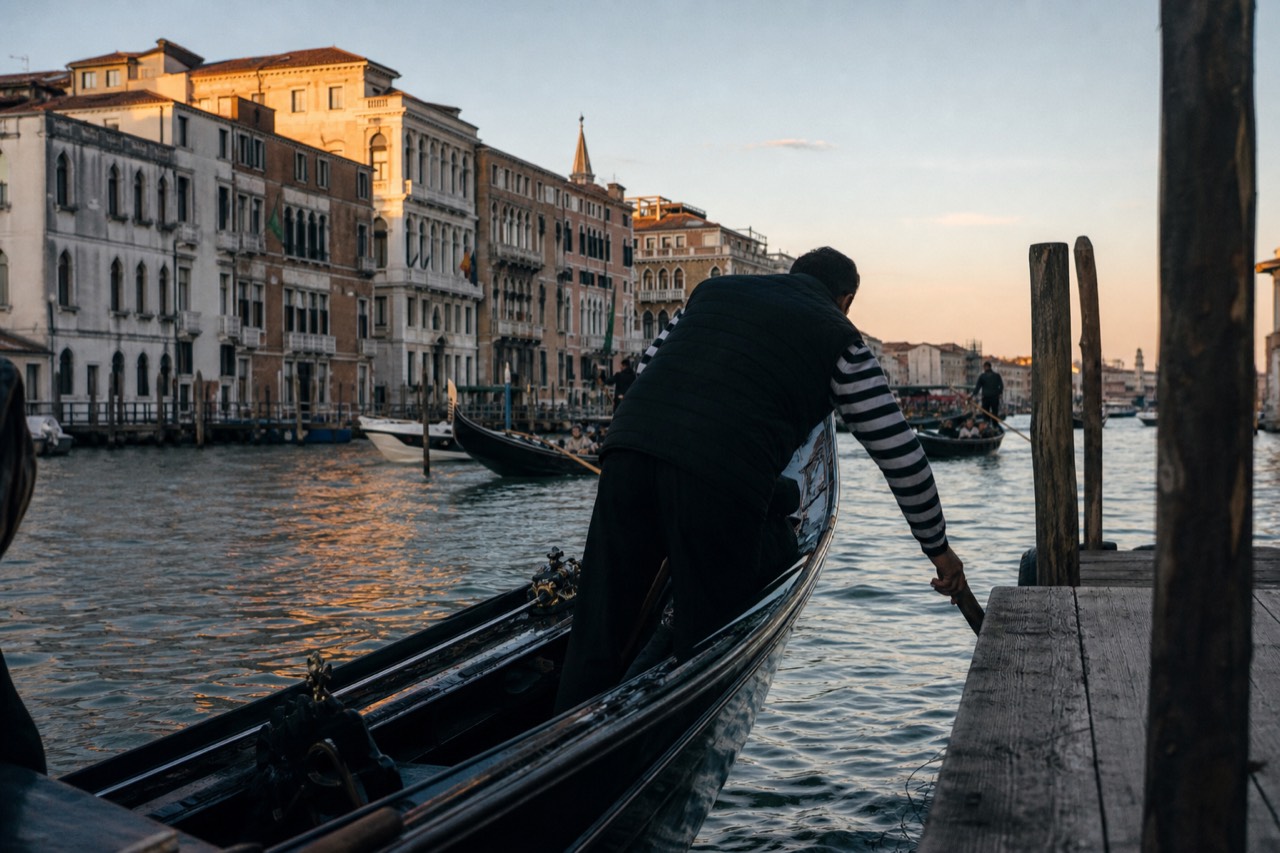
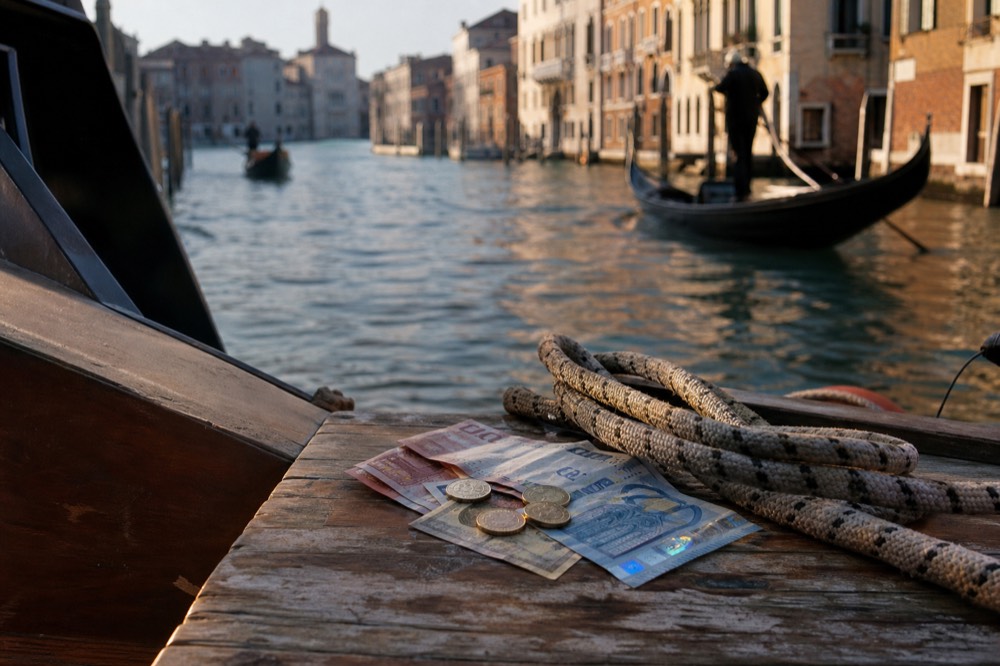
Sometimes, but do not count on it. Walk-up rides at the stations are cash-preferred and often cash-only, in euros. A licensed gondolier should in principle be able to take a card, and travellers report over and over that the terminal is missing, out of signal or simply not offered. Bring the fare in notes.
The reason is structural rather than obstructive. Gondoliers are independent licence holders, not employees of an operator, and on a walk-up ride the regulated fare goes directly from your hand to the rower's. There is no front desk, no booking system and no receipt printer on a boat that is mostly wood and one oar. The trade is coordinated by Ente Gondola but the fare is settled boat by boat.
The current city tariff is €90 for 30 minutes by day and €110 for 35 minutes at night. The city specifies proportional pricing for other durations, so agree the exact length and total before boarding; do not assume a fixed €40 or €50 extension. Timed online packages use their own dated quotes.
What about rides you book online?
Those are card transactions, and they are settled before you travel. A booked ride is paid to the operator when you reserve, so the dock becomes a boarding point rather than a payment point. That is the single practical advantage of booking for anyone who dislikes carrying cash, and it applies from the $43 shared seat upward.
The two systems really are separate. Booked rides carry a per-person price, a fixed departure and, on most of them, free cancellation, none of which the station tariff offers. What you give up is the per-boat arithmetic: five people sharing a walk-up gondola pay €18 each, which no booked seat gets near. That trade is worked through properly in the honest cost breakdown for a gondola.
| How you are riding | Payment | Currency | When you pay | Cancellation |
|---|---|---|---|---|
| Walk-up at a station | Cash in practice | Euros | At the boat, after or before the ride | Nothing to cancel |
| Booked shared seat | Card | Charged in the listing currency | At booking | Free on most rides |
| Booked private boat | Card | Charged in the listing currency | At booking | Free on most rides |
| Traghetto crossing | Coins | Euros | On boarding, €2 | Not applicable |
| Tip, any ride | Cash | Euros | At the end, into the hand | Not applicable |
How much cash should you actually carry?
The current city tariff is €90 for 30 minutes by day and €110 for 35 minutes at night. The city specifies proportional pricing for other durations, so agree the exact length and total before boarding; do not assume a fixed €40 or €50 extension. Timed online packages use their own dated quotes.
Exact change matters more here than it sounds. A gondolier standing in a boat is not carrying a till, and the ride ends with both of you balancing on a step in moving water, which is a poor moment to discover that nobody has €10. Carry the fare in twenties and tens.
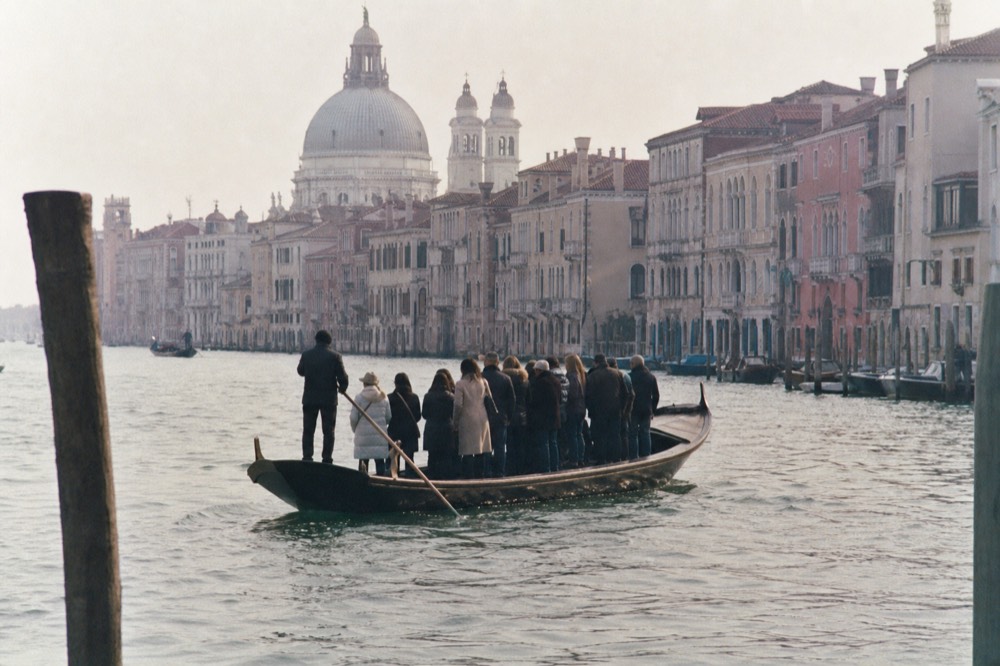
Two other cash notes for the same afternoon. The traghetto, the stripped-down gondola ferry that carries standing passengers straight across the Grand Canal, costs €2 and is coins-in-hand only. It is also, technically, the cheapest gondola in Venice. And the day-tripper access fee that caused so much payment confusion is no longer a factor: the trial ended on 27 July 2026, and the official access-fee portal shows no charge or registration for entering the historic centre, so there is nothing to pay before you reach the water.
Which route suits you better?
If you want the money handled before the trip, book. If you want the boat to yourself at the lowest per-head price, bring euros to a station. Groups of four or five are almost always better off with cash and a walk-up; couples and solo travellers usually come out ahead on a booked seat.
There is no virtue in either method, only fit. The commentary ride is the most-booked half hour in the city at 4.2 across 25,858 reviews, it takes payment by card and it cancels free, which makes it the low-friction default for anyone who would rather not think about notes at all. You can check live prices and dates and compare it against the rest of the shared gondola rides, or look at the private boats if the whole gondola is the point. Whether to hold a slot at all is a separate question, answered in the pre-booking question, and the mechanics of deposits and confirmations sit in how booking a gondola actually works.
Common questions about paying for a gondola
Can I pay a Venice gondolier by card?
Occasionally, and never reliably. Card payment is not consistently available at the stations, so treat any terminal you find as a bonus rather than a plan. If you want to pay by card with certainty, book the ride online in advance and settle it before you arrive.
How much cash do I need for a gondola ride?
The current city tariff is €90 for 30 minutes by day and €110 for 35 minutes at night. The city specifies proportional pricing for other durations, so agree the exact length and total before boarding; do not assume a fixed €40 or €50 extension. Timed online packages use their own dated quotes.
Is the tip expected in cash too?
Yes, when it is given at all. Tipping is optional in Venice rather than customary, and any tip is handed over in euros at the end of the ride. There is no way to add it to a card payment made weeks earlier through a booking, so carry a note if you think you might want to. The full picture is in the tipping question.
Your next step
Check Your Date Before Planning the Rest
Gondola Ride and Gondola Gallery
Discover the boat’s history with an introduction and gallery visit, plus about 30 minutes in a shared gondola.
About 60 minutes overall, not 60 minutes on the water. Meeting point and gallery access depend on the option. No hotel pickup.
Choose a date to see scheduled departures. Availability and final price are confirmed on Viator.
Match the Ride to Your Party and Compare Costs
What Changes Between Options?
- Gondola Ride and Gondola Gallery: Discover the boat’s history with an introduction and gallery visit, plus about 30 minutes in a shared gondola. About 60 minutes overall, not 60 minutes on the water. Meeting point and gallery access depend on the option. No hotel pickup.
- Private Ride From Piazzale Roma: Discover Venice’s quieter canals on a private ride, with durations from 30 to 120 minutes. Up to five, including infants. Choose the duration and meeting point on the listing; the route depends on that option and conditions. Private does not mean accessible.
- Classic Shared Gondola Ride: Book a seat for the straightforward 25–30-minute gondola ride from the San Marco area. Shared boat; seats are assigned by the gondolier. Arrive 15 minutes early. No hotel pickup or included gratuity.
- Private Gondola From Rialto: Spend 45 minutes on your own gondola, departing near Rialto with space for up to five passengers. Choose the 45-minute option. Commentary and hotel pickup are not included. All passengers count toward the boat limit.
Booking through these links may earn us a commission at no extra cost to you.