Why is the gondola ride so expensive?
The city sets the fare at €90 for 30 minutes, per boat, not per person. Here is what that money buys, why the trade stays small, and how to pay less.
 By Marco Zanetti, Venice gondola ride specialist & canal experience guide
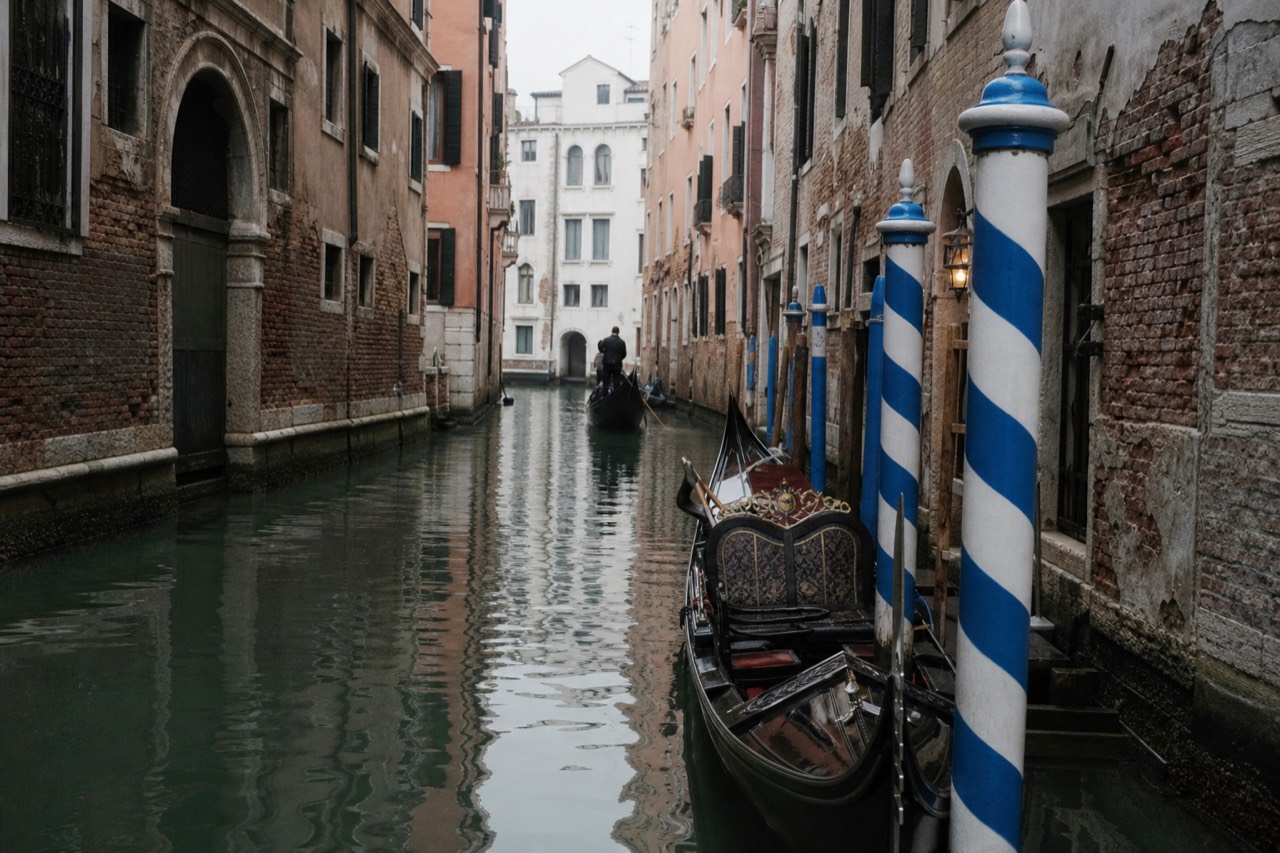
Short Answer
The station fare buys the whole boat, not one seat. Splitting it changes the cost per person; an online package may also include guiding, music or other services. Compare equivalent totals rather than headline prices.
Stand at a gondola station on a July afternoon and you will hear the same sentence in four languages: ninety euros, for half an hour? The board on the pontoon is not a hustle. It is a municipal price list, and the gondolier at the head of the queue cannot discount it even if he likes you.
What the board does not spell out is that the number is a boat price. Five people pay ninety euros. One person also pays ninety euros. Most arguments about whether Venice is fleecing you collapse once you work out which of those two you are.
Price and review comparisons below use the site’s August 2026 snapshot. Online quotes depend on the date, party and option; compare the final total and current inclusions before paying.
Booking choice: See wooden boat restoration and try the rowing skill yourself to understand more of what goes into the experience. Check the Ride Options ↗
Why does half an hour on the water cost €90?
The current city tariff is €90 for 30 minutes by day and €110 for 35 minutes at night. The city specifies proportional pricing for other durations, so agree the exact length and total before boarding; do not assume a fixed €40 or €50 extension. Timed online packages use their own dated quotes.
The rates come from a municipal decree passed in April 2023 and published by the Comune di Venezia. They are per boat, and there is no per-seat rate anywhere in the tariff.
| Passengers aboard | Day ride, €90 for 30 min | Night ride, €110 for 35 min |
|---|---|---|
| 1 | €90 each | €110 each |
| 2 | €45 each | €55 each |
| 3 | €30 each | €36.67 each |
| 4 | €22.50 each | €27.50 each |
| 5 | €18 each | €22 each |
Two travellers looking at €45 a head are entitled to wince. Five people at €18 each are paying less than lunch two streets away, for the same boat and the same gondolier. The cap fell from six passengers to five in 2023, quietly raising the cheapest possible per-head price by a fifth. The standard thirty-minute fare is costed out separately.
What are you actually paying for?
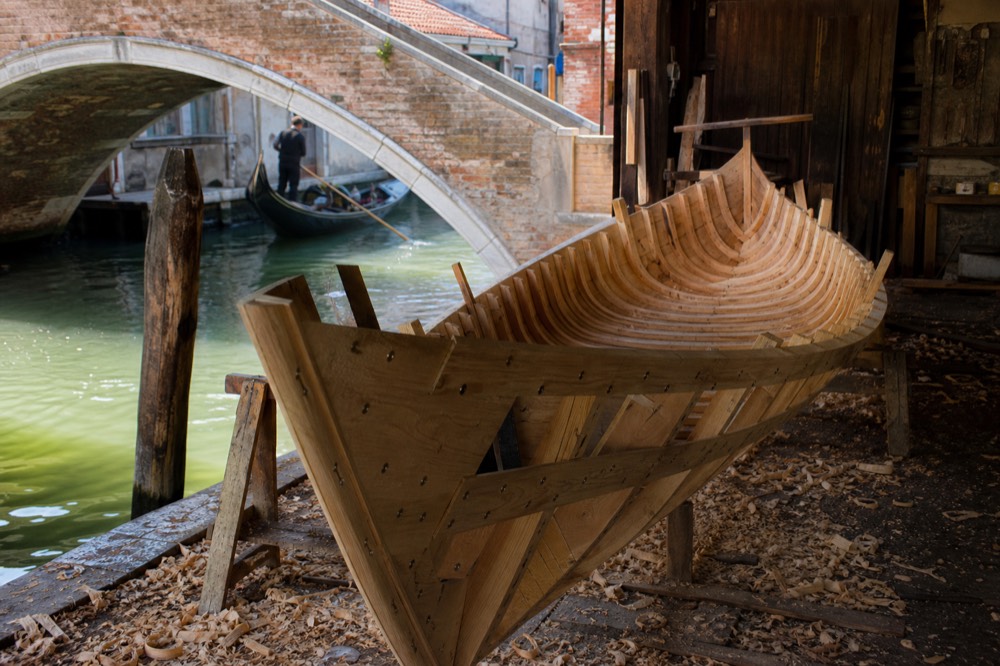
Mostly a handmade wooden boat and the person standing on the back of it. A new gondola costs around €40,000, built by hand from eight woods in roughly 280 pieces, about eleven metres long, 400 kilos, with a deliberately asymmetric hull so a single oar can drive it straight.
Nothing in that construction scales. Oak, fir, cherry, larch, walnut, lime, mahogany and elm each go into a different part of the hull, fitted to a permanent wooden form. The Squero di San Trovaso, the boatyard everyone photographs from across the water, still turns out roughly one new gondola a year. They then live in salt water, so maintenance is constant rather than occasional.
| What sits behind the fare | The real figure |
|---|---|
| A new gondola | around €40,000, built by hand |
| Materials | eight woods, roughly 280 pieces, about 400 kg |
| Where new hulls come from | historic squeri; San Trovaso builds about one a year |
| Boats working today | roughly 400, against about 10,000 in the sixteenth century |
| Licensed gondoliers | around 400 to 433 |
| New licences issued | typically three or four a year |
| Training before the licence | about 400 hours, then a six to twelve month apprenticeship |
Seasonality does the rest of the damage. A gondolier earns in the months visitors come and loses days to rain, fog and high water, while the boat costs the same to keep either way. Nobody offers a January discount, which is why the full price ladder barely moves across the calendar.
Why doesn't competition push the price down?
Because there is almost no competition to have. The number of licences is held at roughly 400 by the gondoliers' institution, only three or four new ones are issued in a typical year, and the fare is fixed by the city on top of that. No gondolier can undercut another one.
Getting licensed takes about 400 hours of training in history, landmarks, languages and boat handling, an exam set by Ente Gondola, then six to twelve months of apprenticeship and a practical test in traffic and high water. Licences often stay within families. Recent coverage of the trade puts an experienced gondolier's earnings as high as €150,000 a year, the predictable output of a capped licence rather than evidence of anyone overcharging.
The fare goes straight to the gondolier, and middleman arrangements on the regulated price are discouraged under the trade's own agreements. The man on the pontoon has neither the interest nor the authority to haggle.
Are you actually getting thirty minutes?
The tariff and the listings both say thirty. Riders regularly report something nearer twenty-five, and on Grand Canal routes only about fifteen of those minutes are spent on the big water. Traffic, tide and the route your gondolier picks all move the number, in both directions.
This is the honest half of the complaint. Reviews through 2026 circle three grievances: cost against duration, the wash and engine noise from water buses and taxis on the busy stretches, and the occasional gondolier who spends the ride on his phone. None of it is universal, and plenty of the same reviews call the ride unforgettable.
The fix is route, not price. Boats leaving from quieter stations draw warmer scores than the mass departures beside the square, the pattern underneath whether the ride justifies the money.
How do you pay less without skipping the ride?
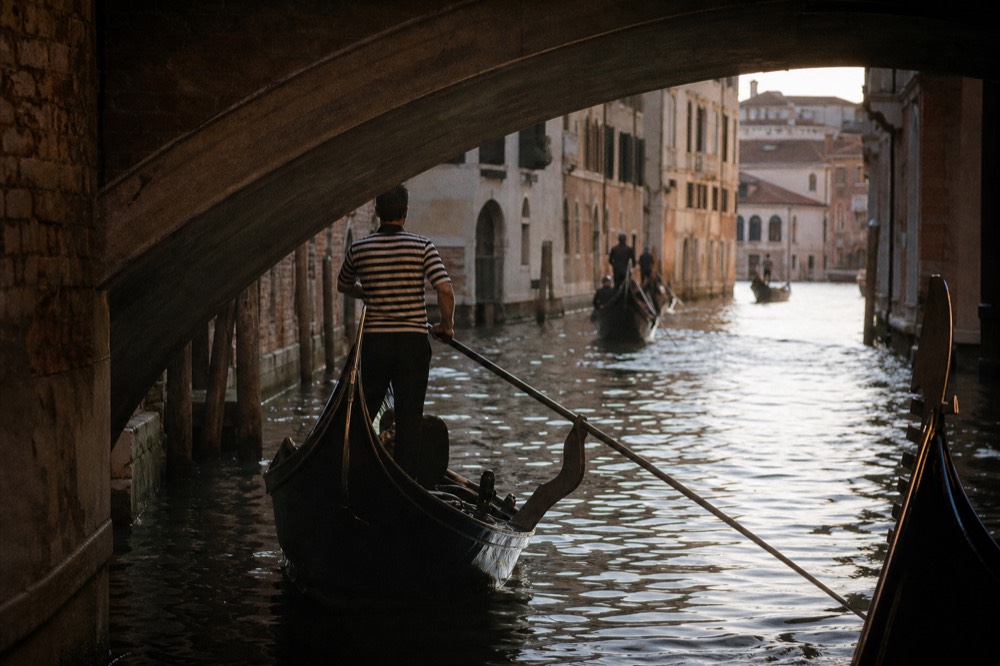
Two levers exist. Share the boat with strangers, which starts at $43 per person for a thirty-minute commentary ride, or fill your own boat so a flat fare divides properly. Everything else on the market is packaging around those two ideas.
| Way to ride | What it costs | The trade-off |
|---|---|---|
| Shared seat with app commentary | from $43 per person, 30 min, 4.2 across 25,858 | fixed route, strangers aboard |
| Shared classic across the Grand Canal | from $46 per person, 30 min, 3.9 across 6,947 | busiest departure point |
| Shared hour with a storyteller | from $44.85 per person, 1 hour | double the time, still shared |
| Walk-up at a station with five | €90 the boat, about €18 each | cash preferred, no booked slot |
| Whole private boat from Rialto | $330.21 per gondola, $66.04 each at five | 45 to 60 min, nobody else aboard |
| Guided walk plus a shared ride | from $70.82 per person, 2.5 hours | cheaper than the two halves apart |
The row that surprises people is the fifth. A whole gondola from the Rialto end at $330.21 carries five for three quarters of an hour, landing near $66 a head: more than a shared seat, less than most per-person private listings, and with the bench to yourselves. Where that crossover falls for your group is worked out in seats versus whole boats.
Smaller parties do better elsewhere. A private boat on the quiet canals starts at $92.56 per person and carries the strongest rating of any plain ride here, 4.3 across 1,099 reviews, and you can check live prices and dates to weigh quiet water against a cheap seat in the crowd. If the ride is one item on a first-visit list, the walk-and-ride combos fold it into a longer morning.
Common questions about gondola prices
Is the €90 gondola price negotiable?
The current city tariff is €90 for 30 minutes by day and €110 for 35 minutes at night. The city specifies proportional pricing for other durations, so agree the exact length and total before boarding; do not assume a fixed €40 or €50 extension. Timed online packages use their own dated quotes.
Why is a shared seat so much cheaper than €90?
Because operators sell individual places on a boat rather than the boat itself, and the city tariff has no per-seat rate at all. Shared rides start at $43 per person. One shared listing still describes six travellers to a gondola, while the tariff has capped passengers at five since 2023, so ask at the pontoon if the number matters to your party.
Does a gondola cost more at night?
The current city tariff is €90 for 30 minutes by day and €110 for 35 minutes at night. The city specifies proportional pricing for other durations, so agree the exact length and total before boarding; do not assume a fixed €40 or €50 extension. Timed online packages use their own dated quotes.
Your next step
Check Your Date Before Planning the Rest
Gondola Ride and Gondola Gallery
Discover the boat’s history with an introduction and gallery visit, plus about 30 minutes in a shared gondola.
About 60 minutes overall, not 60 minutes on the water. Meeting point and gallery access depend on the option. No hotel pickup.
Choose a date to see scheduled departures. Availability and final price are confirmed on Viator.
Match the Ride to Your Party and Compare Costs
What Changes Between Options?
- Gondola Ride and Gondola Gallery: Discover the boat’s history with an introduction and gallery visit, plus about 30 minutes in a shared gondola. About 60 minutes overall, not 60 minutes on the water. Meeting point and gallery access depend on the option. No hotel pickup.
- Classic Shared Gondola Ride: Book a seat for the straightforward 25–30-minute gondola ride from the San Marco area. Shared boat; seats are assigned by the gondolier. Arrive 15 minutes early. No hotel pickup or included gratuity.
- Private Gondola From Rialto: Spend 45 minutes on your own gondola, departing near Rialto with space for up to five passengers. Choose the 45-minute option. Commentary and hotel pickup are not included. All passengers count toward the boat limit.
Booking through these links may earn us a commission at no extra cost to you.