What is the weight limit per person on a gondola?
No operator or city rule publishes a per-person weight figure. The real limits are the five-passenger cap, a hull 1.42 m across, and where you are told to sit.
 By Marco Zanetti, Venice gondola ride specialist & canal experience guide
Short Answer
The reviewed visitor information does not establish a universal kilogram limit. Five passengers is a published boat limit, not a guarantee of individual suitability. Confirm weight, boarding and assistance concerns with the operator before paying.
Search this question and you will find numbers. Confident, specific, kilogram figures presented as if a Venetian office had published them. None of them traces back to anything official. We went looking through the city's tariff decree and every one of the 13 bookable rides on this site, and not one of them states a weight limit per passenger. The absence is the answer, and it is a more useful answer than a fake number would be.
What Venice does regulate is how many people sit in the boat, and it tightened that in 2023.
Price and review comparisons below use the site’s August 2026 snapshot. Online quotes depend on the date, party and option; compare the final total and current inclusions before paying.
Is there a published weight limit for a gondola ride?
No. The official gondola service rules set a fare and a passenger count, not a mass. The 2023 decree caps a gondola at five passengers at €90 for 30 minutes in daytime and €110 for 35 minutes at night, per boat. No listing on this site publishes a weight figure either.
A missing published kilogram figure is not proof that there is no operating limit. The gondolier determines seating and whether the boat can carry the party safely in the conditions on the day. Raise specific concerns before booking.
| What people ask about | What is actually published | Who sets it |
|---|---|---|
| Weight per person | No figure found in the reviewed visitor information | Confirm with the operator |
| Total load per boat | No figure found in the reviewed visitor information | Confirm with the operator |
| Passengers per gondola | 5 maximum, since 2023 | City decree |
| Fare | €90 per boat, 30 min day; €110, 35 min night | City decree |
| Extension beyond the standard ride | Priced proportionally to time | Agree duration and total before boarding |
| Who sits where | Not published, decided aboard | The gondolier |
The one hard number in that table is the five. It was six before spring 2023, and the reduction is the closest thing Venice has to a load rule: fewer bodies in the boat means less mass and less movement. If your question is really about a large party rather than an individual, how many passengers a gondola takes works through the splitting arithmetic.
What actually limits what a gondola carries?
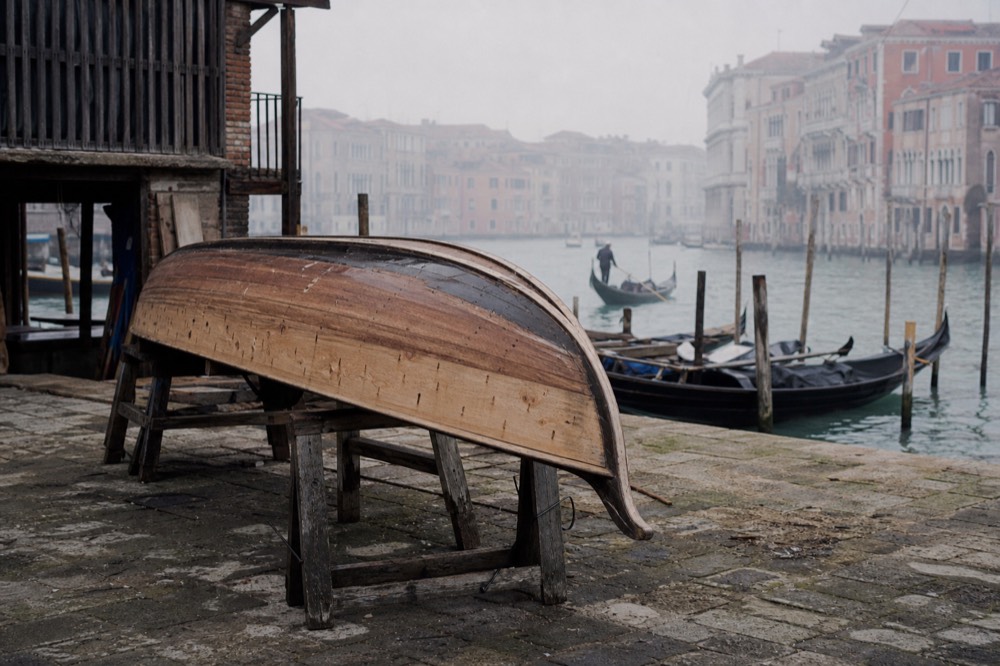
Geometry, not a rulebook. A gondola runs about 11 metres long and only 1.42 metres across at its widest point, weighs roughly 400 kg empty, and has a deliberately asymmetric flat-bottomed hull. One side is shaped differently from the other to counteract the sideways push of a single oar worked from the stern.
That asymmetry is the fact that makes this question interesting. Weight distribution matters on any boat. A gondola is built lopsided on purpose, so that the pull of one oar on one side does not simply spin it, which means the boat has a designed trim it wants to sit at. Put the load in the wrong place and the gondolier is fighting the boat for the whole half hour instead of steering it.
| Measurement | Figure | Why it matters to a passenger |
|---|---|---|
| Length | About 11 m | Long enough that seating spreads out fore and aft |
| Beam at widest | About 1.42 m | Narrow. Two adults abreast fills the bench |
| Empty weight | About 400 kg | The boat itself is most of the mass in the water |
| Hull shape | Asymmetric, flat-bottomed | Balances the sideways force of one stern oar |
| Passenger cap | 5 | Published passenger-count limit |
| Freeboard | Low by design | Sits close to the water even before boarding |
So the practical limit is not what any one person weighs. It is total load plus distribution, and the second half of that is why you will be told where to sit rather than asked. Take the instruction seriously even if the seat you are given is not the one with the better view. Moving around mid-canal is the thing gondoliers actually mind.
How stable is a gondola when you step aboard?
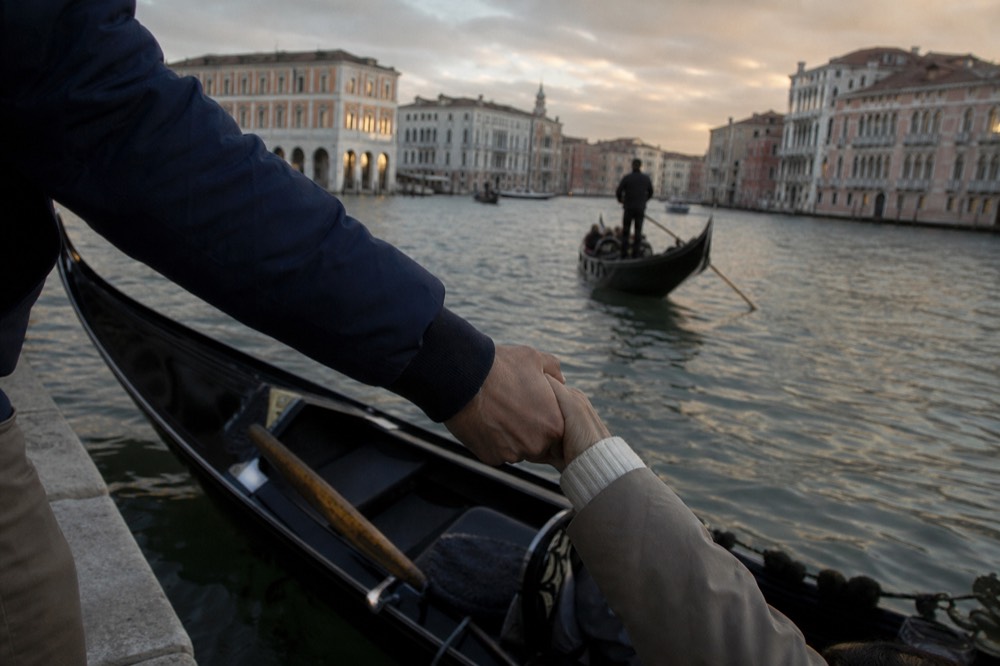
Stable once you are seated, unsteady for the two seconds of the step itself. You board from a stone quay or a floating platform down into a boat that is moving with the wash of passing water traffic, with no gangway and no handrail. The gondolier steadies the boat and offers a forearm to grip.
That step is the part worth planning for, and it is the honest answer to what most people are really asking when they ask about weight. Do not assume that body size alone guarantees acceptance; the operator must confirm whether the boat and boarding arrangements suit your party. What varies is how much of a step down it is, how much the boat is bouncing when you make it, and whether there is a queue of people behind you making you hurry.
Canal traffic is the variable nobody mentions. Recent traveller accounts of Venice gondola rides complain repeatedly about wash and chop from vaporetti and water taxis on the busier stretches, especially the Grand Canal itself. That same wash is what makes a boarding step at a busy San Marco landing harder than the same step at a quieter one. Board somewhere calm and the whole problem shrinks.
Which ride is easiest to board comfortably?
There is no universally easiest gondola to board. A quieter station may feel less rushed, but a private booking does not guarantee a smaller step, a handrail or assistance. Ask the operator about your specific boarding needs before paying.
Shared rides board several passengers on a schedule. Private booking changes who shares the boat, but it does not establish whether the boarding step or assistance will suit you. Ask the operator about your specific needs before making a reservation.
If you would rather compare stations first, the boarding points compared covers which water each one feeds and how crowded each step gets. The full private-ride guide sets out routes and occasions, the private rides on this site lists what is bookable, and the cheaper shared bench seats start at $43 if budget outranks comfort. You can also see every ride compared side by side in one place.
Common questions about gondola capacity and comfort
Will a gondolier refuse a heavier passenger?
There is no published rule that would let anyone quote you a threshold, and no weight figure appears in the city decree or in any listing. What a gondolier does control is the passenger count, capped at five, and where each person sits so the boat trims properly. If you have a specific concern, raise it with the operator when booking rather than at the step.
Are gondolas suitable for someone with limited mobility?
Boarding commonly involves a step into a low boat that moves with the water. Several current listings explicitly exclude wheelchair users, and a private reservation does not guarantee a ramp, rail or assistance. Describe your needs to the operator and confirm the actual arrangements before paying.
Does a full boat of five ride lower in the water?
Yes, and noticeably. The hull weighs around 400 kg empty and sits low by design, so five adults represent a large proportional increase in load. That is part of why the city reduced the maximum from six to five in 2023. The gondolier must assess the party and conditions; a passenger count alone is not a personal safety assurance.